How to Sleep With Neck Pain: 6 Steps to Wake Up Without Stiffness
Say goodbye to neck pain, snoring, and restless nights with the ergonomic Derila Ergo pillow.
Get -70% DiscountTo sleep with neck pain, switch to side sleeping with your spine in a neutral line, use a pillow tall enough to fill the gap between your ear and shoulder, and place a second pillow between your knees. The single fastest fix is replacing a flat or old pillow with a contoured ergonomic one — most people feel the difference on the very first night.
Neck pain while sleeping is overwhelmingly positional — and most of it is fixable without medication or physiotherapy, simply by correcting two variables: how you're lying and what's supporting your head. Below are 6 specific, actionable steps you can apply starting tonight.
Why Neck Pain Gets Worse at Night (And What's Actually Causing It)
During the day, your neck muscles actively stabilize your head. At night, they're supposed to rest — but if your pillow or position forces them to compensate for poor alignment, they work throughout your sleep. You wake up more fatigued than when you went to bed.
- ⚠️ Flat pillows let your head sink, creating sideways neck flexion for 6–8 hours
- ⚠️ Stomach sleeping rotates your cervical spine up to 90° — sustained for hours
- ⚠️ Old pillows lose 40–60% loft, meaning support disappears mid-night
- ⚠️ Brachial plexus compression causes arm numbness and tingling by morning
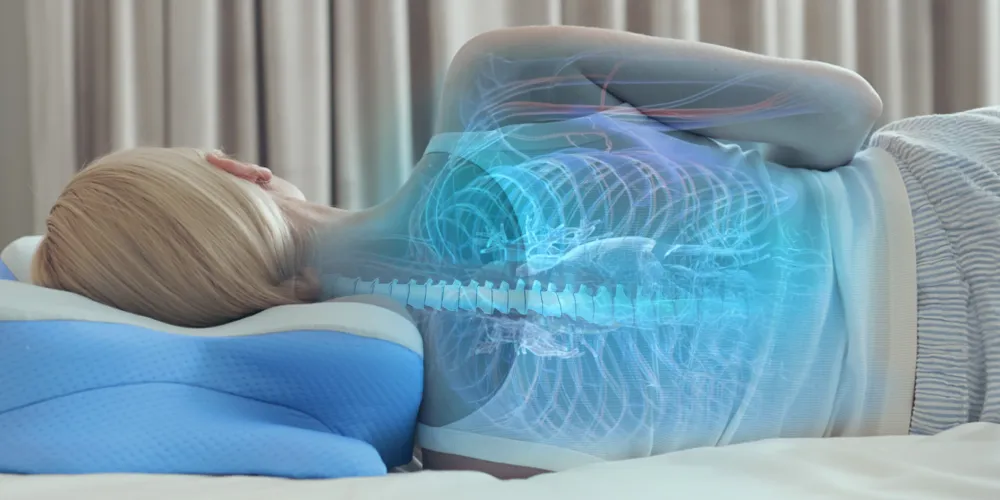
How to Fix Neck Pain While Sleeping: 6 Steps Starting Tonight
Apply these in order. Steps 1 and 2 alone will produce a noticeable difference within 3 nights for most people.
Lie on your side with a straight line from your ear to your hip. Your chin should be neither tucked toward your chest nor lifted — it should feel neutral, like you're standing. Keep your shoulders relaxed and open, not hunched forward. If you naturally roll to your stomach overnight, place a firm body pillow behind your back as a physical anchor.
Side sleeping reduces cervical rotation to near zero and keeps the airway open, which also reduces snoring as a secondary benefit.
Your pillow's loft — its height when compressed under your head — is the single most important variable in cervical alignment. For a side sleeper, the correct loft fills the exact gap between your ear and the mattress, keeping your head perfectly level. Too low and your head droops. Too high and your neck angles upward. Most standard pillows are too low for side sleepers by 1–2 inches.
For back sleepers, the loft should be lower — just enough to maintain the natural inward curve of the cervical spine without pushing the chin toward the chest.
Many side sleepers correctly position their head but unknowingly let their bottom shoulder roll forward and collapse under their body weight. This twists the shoulder girdle and sends a chain of tension directly up into the cervical muscles. Keep your bottom shoulder slightly open and back — almost like you're broadening your chest.
Your pillow should extend far enough to partially support the shoulder area, not just the head. A pillow that ends at your ear leaves your shoulder unsupported and creates lateral strain.
When your top knee drops forward toward the mattress without support, your pelvis tilts — and that pelvic tilt rotates the lumbar spine, which transmits tension all the way up the spinal column to your neck. This is why some people have neck pain that doesn't resolve even after fixing their pillow: the source is hip misalignment.
Place a thin pillow or rolled towel between your knees when side sleeping. It costs nothing and many people report immediate relief in both hip and neck tension.
Scrolling on your phone before sleep causes sustained cervical flexion — your head drops forward 15–30° for 30–60 minutes right before you lie down. This leaves your neck flexors in a shortened, fatigued state before they even need to "rest." Any positional imperfection during sleep is then magnified because the muscles start the night already under strain.
Set a 30-minute screen-free window before bed. Use that time to do the 2-minute neck release described in the next step instead.
Standard polyester pillows lose 40–60% of their loft within 3–4 hours. This means the support you have at 10pm is gone by 2am — and the worst of your cervical strain happens in the second half of sleep. High-density memory foam contour pillows maintain their shape throughout the entire night.
The Derila Ergo Pillow was designed specifically for this problem: its butterfly contour works for side, back, and combination sleepers, and its high-density foam doesn't flatten. It also allows your hands to rest naturally in the contoured wings — reducing shoulder tension as a secondary benefit.

Steps 1–5 are free. Step 6 is the multiplier that makes everything else work.
🛒 See the Derila Ergo — Today's Price & Discount🔒 Secure checkout | 30-day money-back guarantee
Research backed: A systematic review published on PubMed confirms that cervical pain during sleep is strongly associated with unsupported spinal posture and pillow loft mismatch — and that ergonomic pillow design significantly reduces reported pain intensity and morning stiffness scores.
Pillow Types for Neck Pain While Sleeping: Quick Comparison
| Pillow Type | Holds Shape All Night | Cervical Support | Works for Side + Back | Lifespan |
|---|---|---|---|---|
| Standard Polyester Fill | ✗ Collapses by 2–3am | ✗ None | ✗ Neither | 6–12 months |
| Memory Foam (flat) | ✓ Yes | ~ Partial | ~ Back only | 2–3 years |
| Down / Feather | ✗ Flattens quickly | ✗ None | ✗ Neither | 1–2 years |
| Derila Ergo (Contour Memory Foam) | ✓ All night | ✓ Cervical curve | ✓ Side + Back | 3–5 years |
The Fastest Fix for Neck Pain While Sleeping
Steps 1–5 in this guide are positional — they cost nothing and can be applied tonight. But if you want lasting results, Step 6 is the one that compounds everything else. A pillow that fails at 2am undoes all the correct positioning you started with.
After reviewing the options available in 2026, the Derila Ergo stands out as the most complete solution for people who sleep on their side, back, or both — which covers the vast majority of neck pain sufferers. The butterfly contour, high-density foam, and consistent loft throughout the night make it the closest thing to a guaranteed result available without a prescription.
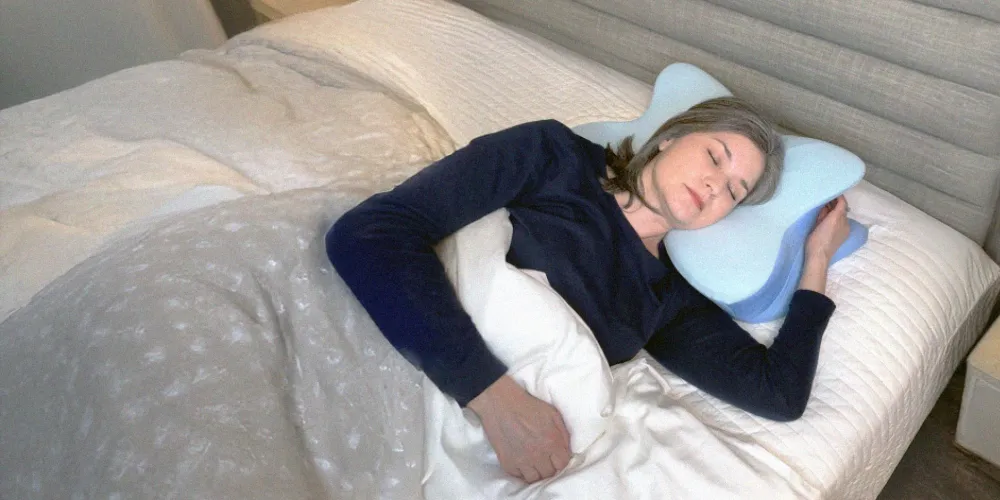
People Who Learned How to Fix Neck Pain While Sleeping
"I woke up with a stiff neck every single morning for 18 months. I tried everything. Bought this pillow, followed the side-sleeping tips in this article, and on day 4 I woke up completely pain-free. I genuinely cried."
"The tip about the pillow between the knees completely changed things for me. I didn't understand why my neck hurt when my pillow was fine — turns out my hips were the problem. Combined with the Derila, I'm sleeping through the night now."
"My old pillow was flat by 1am — I'd wake up constantly repositioning. This one is exactly the same height at 7am as it was when I fell asleep. The stiffness is completely gone. I've already ordered one for my partner."
Neck Pain While Sleeping — Frequently Asked Questions
Stop Waking Up in Pain. Fix It Tonight.
Now you know how to fix neck pain while sleeping. Apply the 6 steps, start with the pillow, and most people feel the difference within 3 nights.
 🛒 Claim Your Derila Ergo — See Today's Deal
* Affiliate disclosure: This article contains affiliate links. We may earn a commission if you purchase through our links, at no extra cost to you. All opinions are our own. This site is not affiliated with or endorsed by Derila Ergo or Orbio World.