Short answer: Yes — if your neck hurts from your pillow every morning and the pain eases as the day goes on, your pillow is almost certainly the cause. Neck pain from a pillow happens when the wrong loft, density, or shape forces your cervical spine out of alignment for 6–8 hours straight. The good news: a pillow causing neck pain is one of the most fixable sleep problems there is. Below are the 6 exact mechanisms — and the solution for each.

1 6 Ways Your Pillow Causes Neck Pain — And How to Fix Each One
Understanding exactly how a pillow causes neck pain is the first step to eliminating it. Most people assume neck pain comes from how they sleep — but the real culprit is usually what they sleep on. The wrong pillow keeps your cervical spine misaligned for 6 to 8 hours every night, and that sustained stress accumulates into the stiffness and soreness you feel every morning. According to the Sleep Foundation, pillow loft and firmness are among the leading factors in sleep-related neck pain. Here are the 6 most common ways your pillow causes neck pain — and the specific fix for each.
- 1 It's too flat for side sleeping A flat or undersized pillow doesn't fill the gap between your shoulder and your head, forcing the neck into lateral flexion for hours. This sustained sideways bend is the single most common way a pillow causes neck pain in side sleepers — and it's entirely preventable. ✓ Fix: Switch to a cervical contour pillow with 4–6" loft for side sleeping.
- 2 It's too high for back sleeping A thick pillow pushes the head into forward flexion — chin toward chest — straining the posterior cervical muscles and compressing the facet joints at the base of the skull. Many back sleepers unknowingly sleep on a side sleeper's pillow, which is why their neck pain keeps returning despite changing positions. ✓ Fix: For back sleeping, use a medium-low contour pillow that preserves the natural neck curve.
- 3 The foam has compressed overnight Low-density memory foam (under 3 lb/ft³) loses its loft within 1–2 hours under a sleeping head's weight. By 3am, the pillow that causes neck pain the most is the one that started firm but collapsed while you slept. High-density foam is the only material that maintains its rated loft all night. ✓ Fix: Replace with high-density foam (4+ lb/ft³) that holds its shape through the night.
- 4 No neck support — only head support A flat pillow, even a thick one, supports the back of the skull but leaves a gap under the neck. Your cervical muscles spend all night bridging this gap isometrically — they fatigue and go into protective spasm by morning. A pillow that causes neck pain this way can be identified easily: if you can slide your hand under your neck while lying on it, the support zone is missing. ✓ Fix: Use a contoured cervical pillow with a dedicated neck support zone — not just a head cradle. Proper cervical alignment with a contoured neck support zone vs. a flat pillow.
- 5 It's old and deformed A pillow causes neck pain progressively as it ages. After 2 years, most pillows show uneven wear: visible lumps, flat spots, or asymmetry that create different support levels depending on which side you lie on. This inconsistency makes neck pain unpredictable — sometimes worse, sometimes better — which often makes people blame their sleep position instead of the pillow itself. ✓ Fix: Replace pillows every 1.5–2 years. The fold test: if it doesn't spring back when folded in half, it's done.
- 6 It's designed for the wrong sleep position Using a back-optimized low pillow while sleeping on your side is the most common pillow mismatch — and one of the most damaging ways a pillow causes neck pain. The position-loft mismatch forces the neck into sustained lateral flexion all night. A butterfly contour design solves this by providing the right loft profile for both side and back sleeping in a single pillow. ✓ Fix: Match pillow loft to your primary sleep position — or choose a dual-contour design that adapts to both. The butterfly contour provides the correct loft for both side and back sleeping — eliminating position mismatch.
2 FAQ
My neck hurts from my pillow — how do I know for sure?
If your neck hurts from your pillow, the pattern is distinctive: pain is worst within the first 30–60 minutes of waking, then gradually improves as you move around. It's not consistent with injury pain, which tends to be constant. Other signs: the pain is on the side you predominantly sleep on; it shifts when you change sleep position for a night; and it's been building gradually over months rather than appearing after a specific incident.
What's the fastest fix when neck pain from a pillow is severe?
For immediate relief when neck pain from a pillow is acute: apply a warm compress for 15 minutes in the morning to release muscle spasm, then do slow neck rotations (not full circles — side to side and chin to chest only). Long-term, switch to a high-density contoured pillow with a dedicated neck support zone. Most people report significant reduction in morning stiffness within 3–5 nights of switching pillows. If pain persists beyond 2 weeks regardless of pillow change, consult a physiotherapist.
Can a pillow cause neck pain?
Yes. A pillow that is too flat, too thick, too soft, or the wrong shape for your sleep position forces the cervical spine into unnatural positions for 6–8 hours. This leads to muscle fatigue, facet joint compression, and the classic morning stiffness most people have accepted as normal.
How do I know if my pillow is causing neck pain?
Clear signs: pain is worst in the morning and improves during the day; pain is better when you sleep in a different position; you've had the pillow for more than 2 years; your head sinks significantly into the pillow; you frequently adjust it during the night.
How often should you replace your pillow?
Most pillows should be replaced every 1–2 years. High-density memory foam pillows can last 2–3 years depending on density. Signs it's time: the pillow doesn't spring back when folded, you can see visible deformation, or your neck pain has gradually worsened over time.
Is my pillow too high or too low?
If you sleep on your side: the pillow should fill the gap between your head and the mattress so your spine is perfectly horizontal. If you sleep on your back: the pillow should be medium-low, keeping the natural cervical curve without pushing your chin toward your chest. A simple test: take a photo of yourself sleeping — if your neck is bent in any direction, the loft is wrong.
What type of pillow is best for cervical neck pain?
High-density memory foam (4+ lb/ft³) with a butterfly or contour shape is considered the most effective for cervical pain. The contoured shape provides dedicated neck support — not just head support — and the high-density foam maintains its loft throughout the night without compressing. Avoid down, polyester fill, and low-density foam.
Can the wrong pillow cause shoulder pain too?
Yes. The cervical spine connects directly to the brachial plexus — the nerve network that runs into the shoulder and arm. When the neck is misaligned overnight, these nerves can be compressed, causing referred pain, numbness, or tingling in the shoulder, upper arm, or even the fingers. Proper cervical alignment from a contoured pillow relieves this nerve pressure.
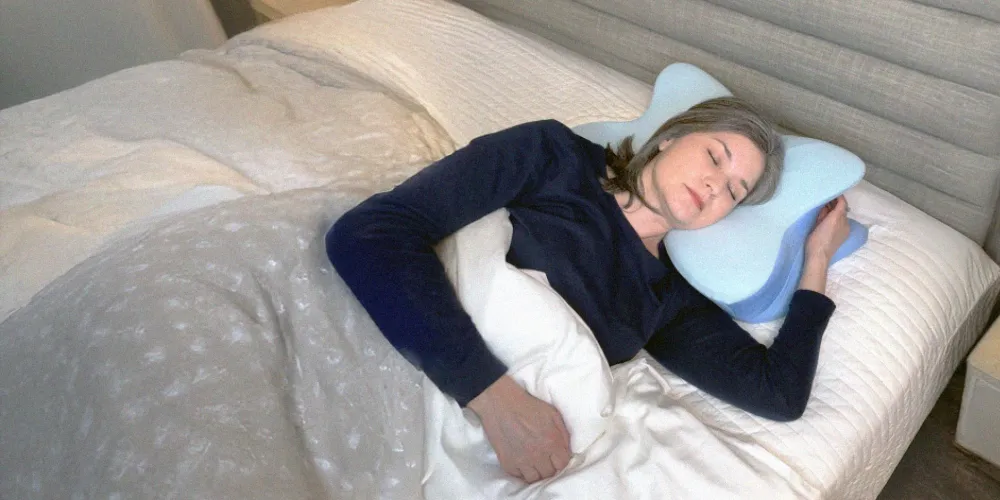
Fix reasons 1–6 with one pillow
Read our full Derila Ergo review — the pillow that addresses every common cause of sleep neck pain.