▶ How Your Pillow Affects Your Airway & Cervical Alignment
Before diving into positions, watch this short breakdown of how cervical alignment during sleep directly impacts nerve function, airway openness, and muscle recovery. The pillow is the variable that makes or breaks every position.
1 Sleep Positions Ranked for Neck Pain
2 How to Set Up Each Position Correctly
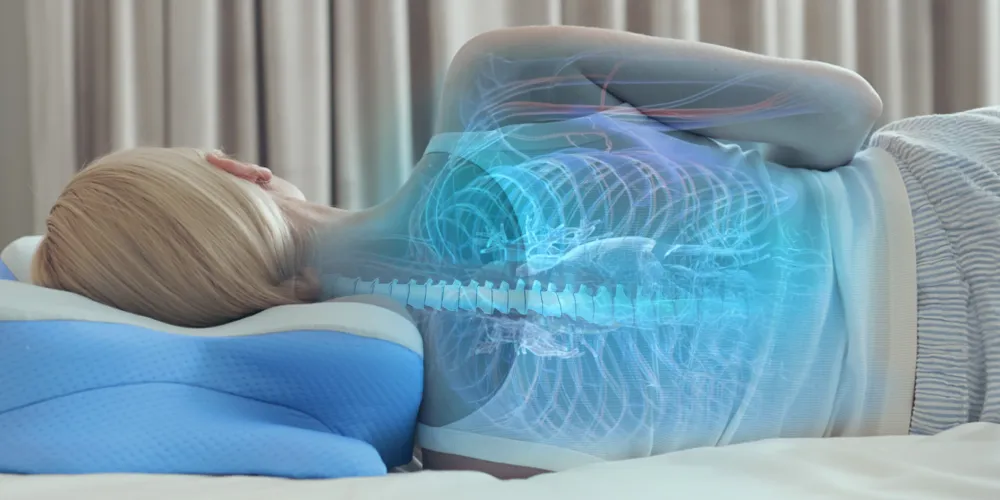
Side sleeping: Use a cervical contour pillow with enough loft to fill the shoulder-to-head gap (typically 4–6 inches). Spine should form a straight horizontal line from head to hips. Place a pillow between your knees to level the hips and reduce spinal rotation. Hug a body pillow to prevent rolling. According to the Sleep Foundation, side sleeping is the most recommended position for spinal health when paired with the correct pillow height.
Back sleeping: Use a low-to-medium profile contoured pillow — just enough to maintain the natural cervical inward curve without pushing the head forward. A pillow under the knees reduces lumbar strain and prevents rolling sideways with no support.
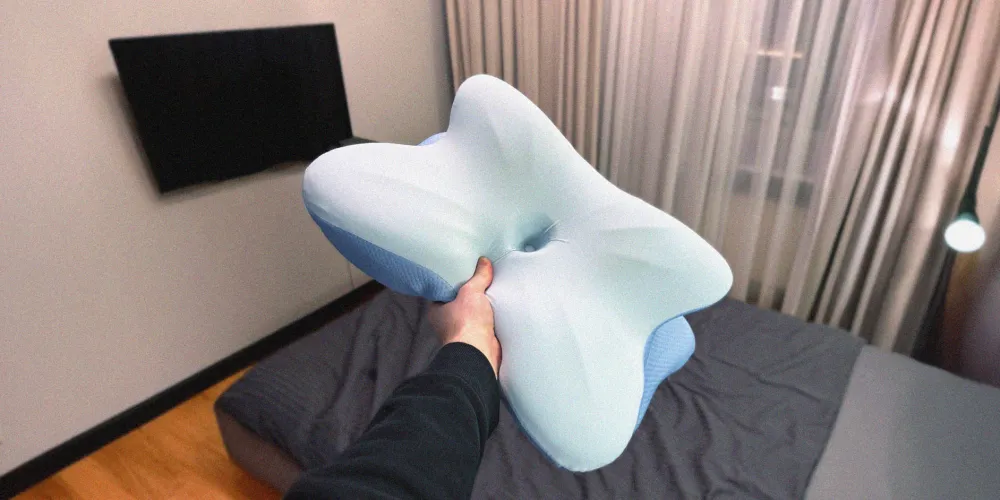
Transitioning from stomach sleeping: The lateral wing edges of a butterfly contour pillow make side sleeping the path of least resistance. Most people transition within 2–3 weeks of using a properly designed side-sleeper pillow.
3 Pillow Height: Why It Matters More Than Position
Most people obsess over sleep position but ignore pillow height — which is the variable that actually determines whether your cervical spine is neutral or strained. The wrong height creates the same mechanical problem regardless of which position you're in.
| Sleep Position | Ideal Pillow Height | Too Low | Too High |
|---|---|---|---|
| Side sleeping | 4–6 inches (shoulder width) | Lateral flexion | Lateral extension |
| Back sleeping | 2–4 inches (low profile) | Hyperextension | Forward head posture |
| Stomach sleeping | No pillow (or ultra flat) | Avoid — rotation unavoidable | |

4 Signs Your Current Pillow Is Wrong for Your Sleep Position
Morning neck stiffness isn't random. Your body leaves clear signals when the pillow is mismatched. If you experience three or more of these consistently, your pillow — not your position — is likely the root cause.
5 What People Say After Finding the Best Sleeping Position for Neck Pain
These are verified reviews from users who combined proper sleep position with the right pillow support. The pattern is consistent: the fix was simpler than expected.

6 FAQ
What is the best sleeping position for neck pain?
Side sleeping with a correctly sized cervical pillow is best for most neck pain sufferers. It maintains neutral spinal alignment while the raised pillow fills the shoulder gap. Back sleeping is second best. Stomach sleeping is the worst position and should be avoided entirely if you have chronic neck pain.
Is sleeping on your back good for neck pain?
Back sleeping is good for neck pain as long as the pillow maintains the natural cervical lordosis — the inward curve of the neck. A thin contoured pillow works well. A pillow that's too thick pushes the head forward and strains the posterior cervical muscles overnight.
Does side sleeping cause neck pain?
Side sleeping only causes neck pain when the pillow is too low (causing lateral neck flexion) or too high (causing lateral extension). With the correct pillow height for your shoulder width, side sleeping is excellent for neck health and cervical alignment.
What pillow height is correct for side sleeping?
For side sleeping, the pillow should fill the gap between your ear and shoulder — typically 4 to 6 inches, depending on your shoulder width. The spine should form a straight horizontal line from head to hips. A contoured pillow with raised lateral edges, like the Derila Ergo, does this automatically for both narrow and broad shoulders.
How do I stop sleeping on my stomach?
Place a firm pillow behind your back to prevent rolling supine, hug a body pillow to maintain lateral positioning, and use a contoured side-sleeper pillow that makes side sleeping more comfortable. Most people transition within 2–3 weeks of consistent effort. A butterfly contour pillow with raised lateral edges makes this easier because side sleeping becomes the position of least resistance.
Get the pillow that makes good position effortless
The Derila Ergo supports side and back sleeping automatically — no nightly adjustments needed.